
Command Palette
Search for a command to run...
AI Agents
(34) resourcestagged resources
AI Agents Resources
@shadcn/lint
newAgent-focused linter for Tailwind v4 design systems. Enforces component, token, color, and class rules through ESLint or Oxlint, with fix guidance drawn from the project's own components and theme.
AI Agents and the Natural Language UI Paradigm
Natural language replaces menu-driven navigation. Queries like 'Show me what I can afford next month' become first-class product interactions — an intent layer that rewrites how financial and consumer products are designed. Explores autonomy/automation balance and generative UI patterns for agent-first product surfaces.
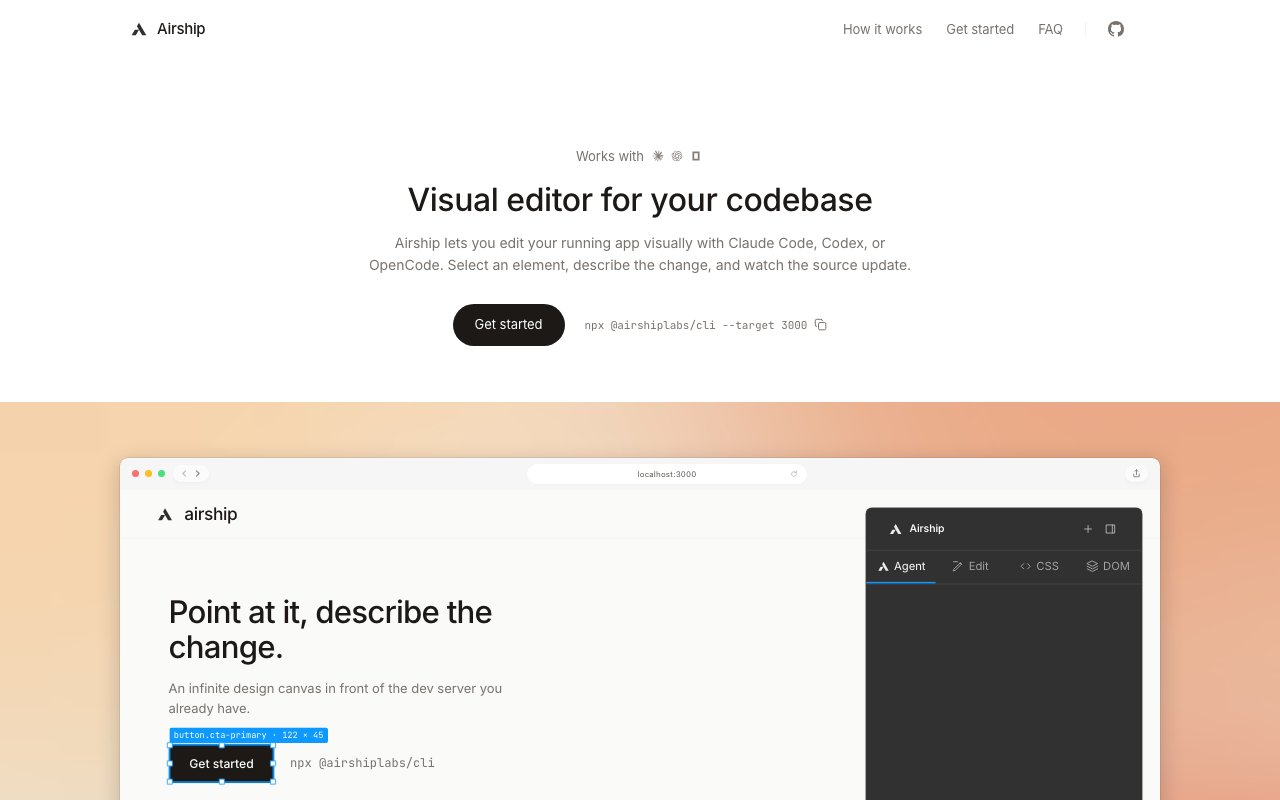
Airship
Open-source visual editor that wraps a running web app in a Figma-like canvas, maps selected elements to source files, and lets Codex, Claude Code, or OpenCode apply reviewable edits.
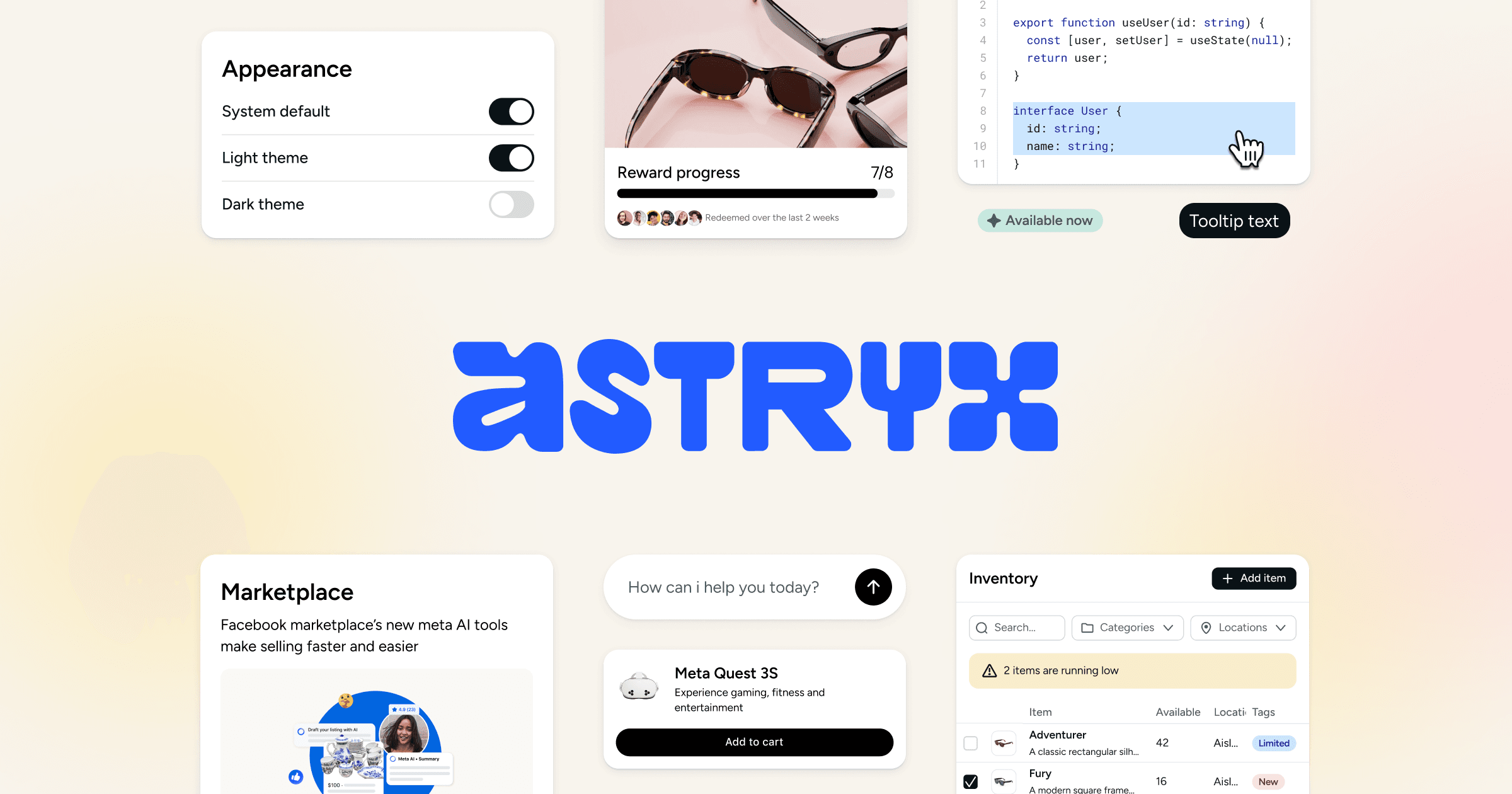
Astryx
Open-source React 19 design system from Meta with 150+ accessible components, seven themes, templates, and a CLI. Shared conventions and documentation support people and coding agents.
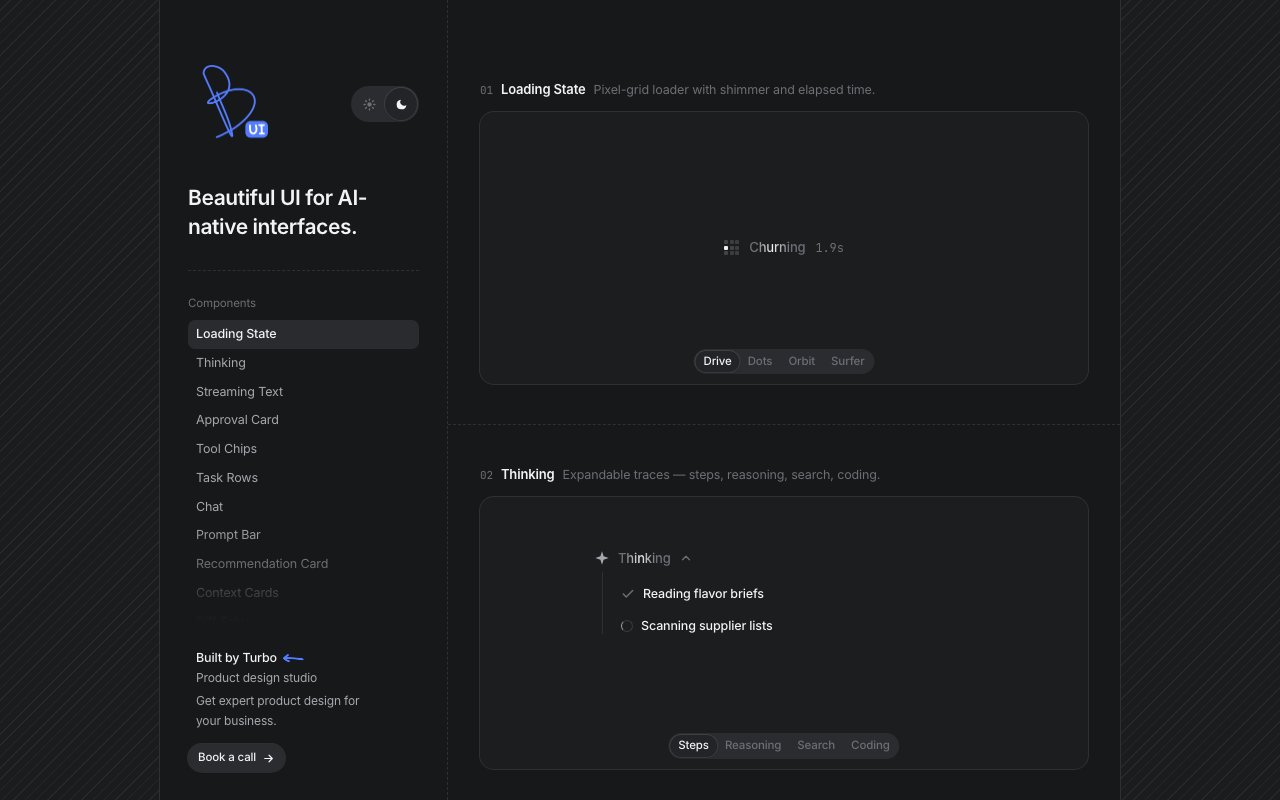
Beautiful UI
Collection of copyable interface primitives for AI products, including streaming text, approval cards, tool-call states, task progress, retrieved context, and data diffs.
Behavioral Contracts — Designing AI Agent Policies as Design Artifacts
Emerging design practice: formal 'behavioral contracts' define how AI agents decide, handle failures, and communicate. These policy documents live alongside wireframes and specs — a new design artifact for the agentic era. Marks the beginning of a discipline where designers define agent constraints, not just visual flows.
Better Design
Design MCP server and shadcn/ui registry that gives coding agents design tokens, UI principles, component code, icon direction, and accessibility review rules.
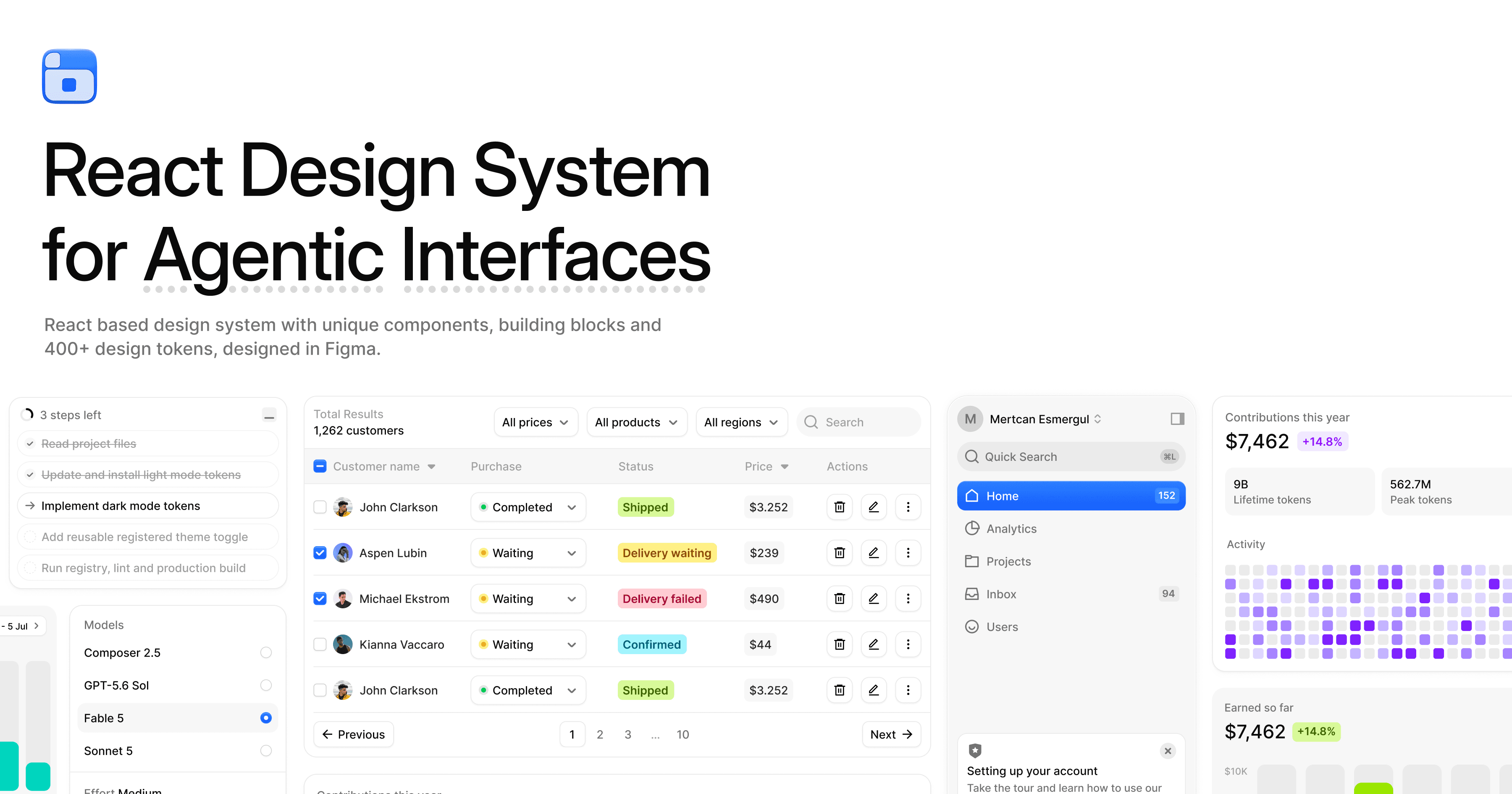
BoardUI
React and Tailwind design system for agentic products, with source-installable chat, agent-status, dashboard, chart, and form components plus Figma tokens, CLI tools, and MCP access.
Design Systems MCP Server
MCP server that lets AI assistants search curated design system knowledge, including WCAG, ARIA, W3C standards, and major public design systems.
DESIGN.md: design system format for coding agents
Open-source format from Google Labs that describes a design system to coding agents. Combines YAML design tokens with markdown rationale in one file, plus a CLI to lint, diff, and export tokens to Tailwind or DTCG.
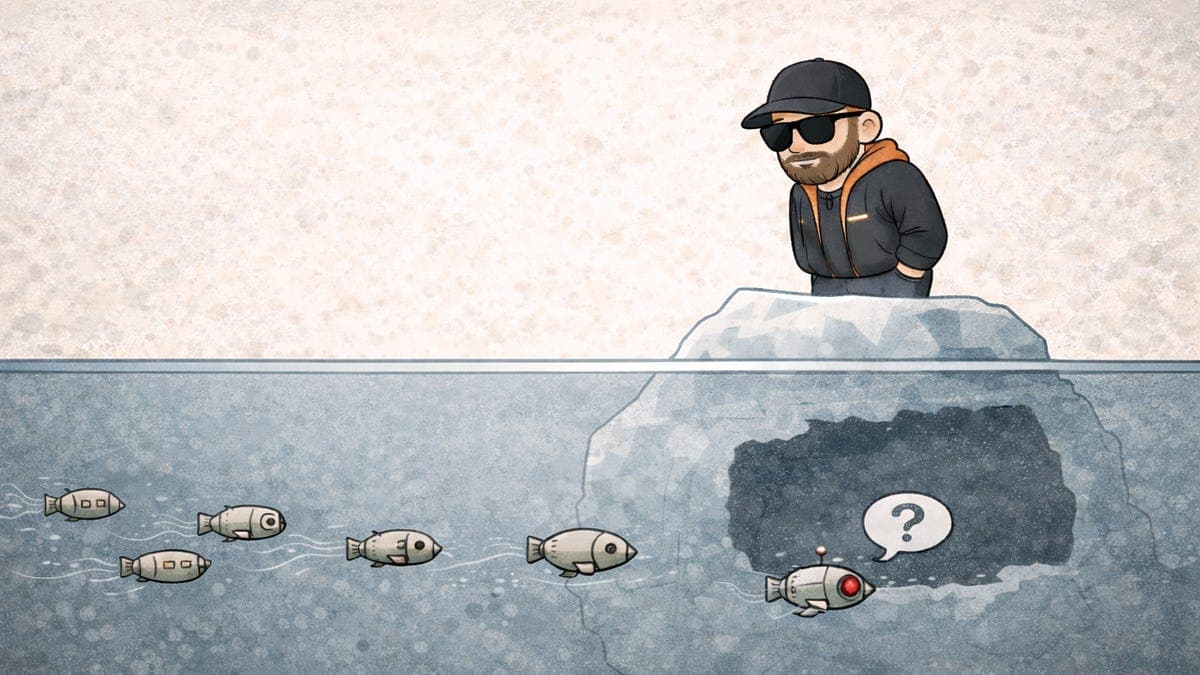
Designing Products AI Agents Can Actually Use
A paradigm shift for product design: as AI agents increasingly initiate transactions, interfaces must be discoverable and executable by machines, not just humans. Explores new design constraints for financial products, e-commerce, and any service where agents act on behalf of users.
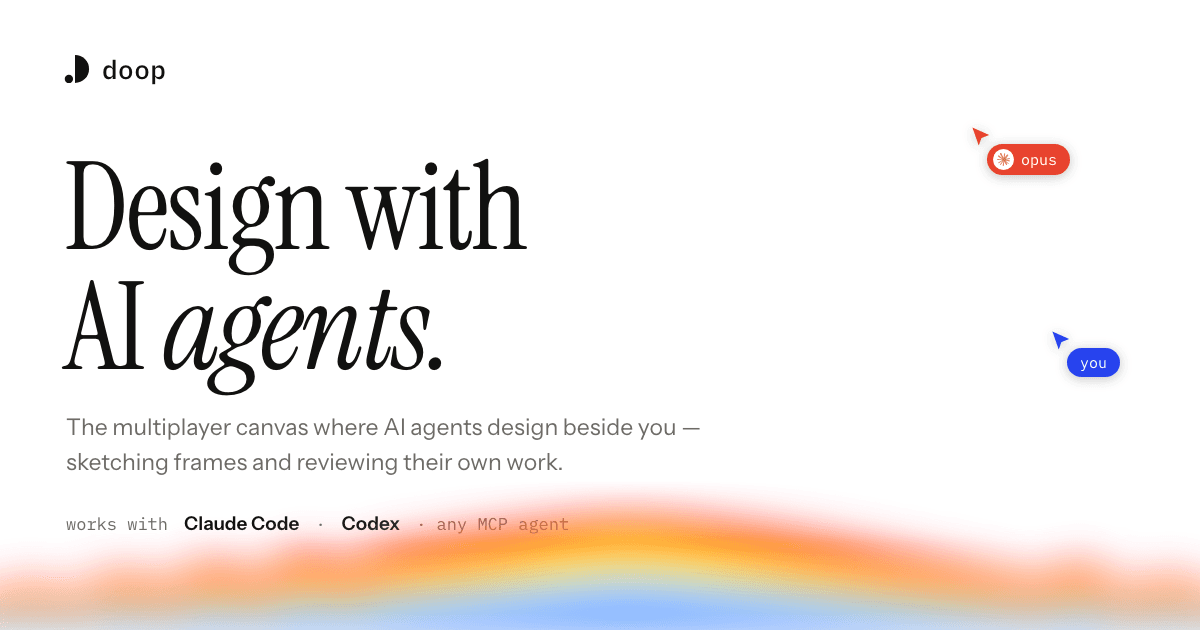
Doop
newOpen-source multiplayer design canvas where people edit in the browser while Claude Code, Codex, and other MCP agents create and revise live HTML frames. Hosted beta and self-hosting are available.
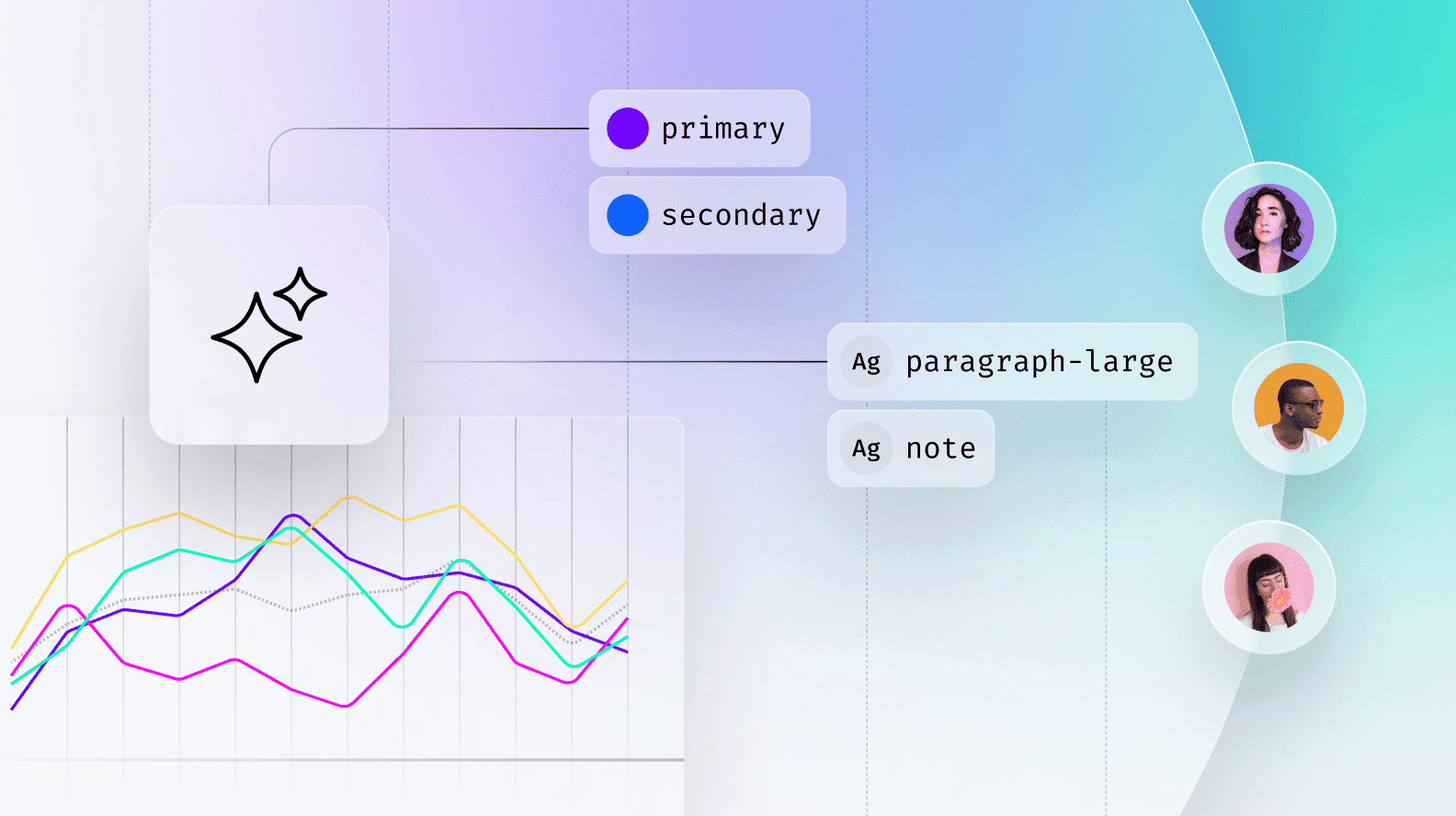
Enterprise Design Systems 2026: Agents as Governance Layer
Autonomous agents now span Figma → Jira → GitHub — detecting design drift, enforcing brand principles, and flagging accessibility failures in code. This is the governance-beyond-humans model: agents become the system's immune system. Unified collaboration hubs replace handoff lag with real-time spec access in editors and tickets.
Figma Community Resources
Official open-source index of Figma plugins, widgets, agent skills, and developer references. Useful for finding working examples and source code for extending Figma and its MCP workflows.
Figma MCP Server Guide
newOfficial guide to connecting AI coding tools with Figma's MCP server, covering canvas writes, design-context extraction, Code Connect, client setup, rate limits, and reusable workflow skills.
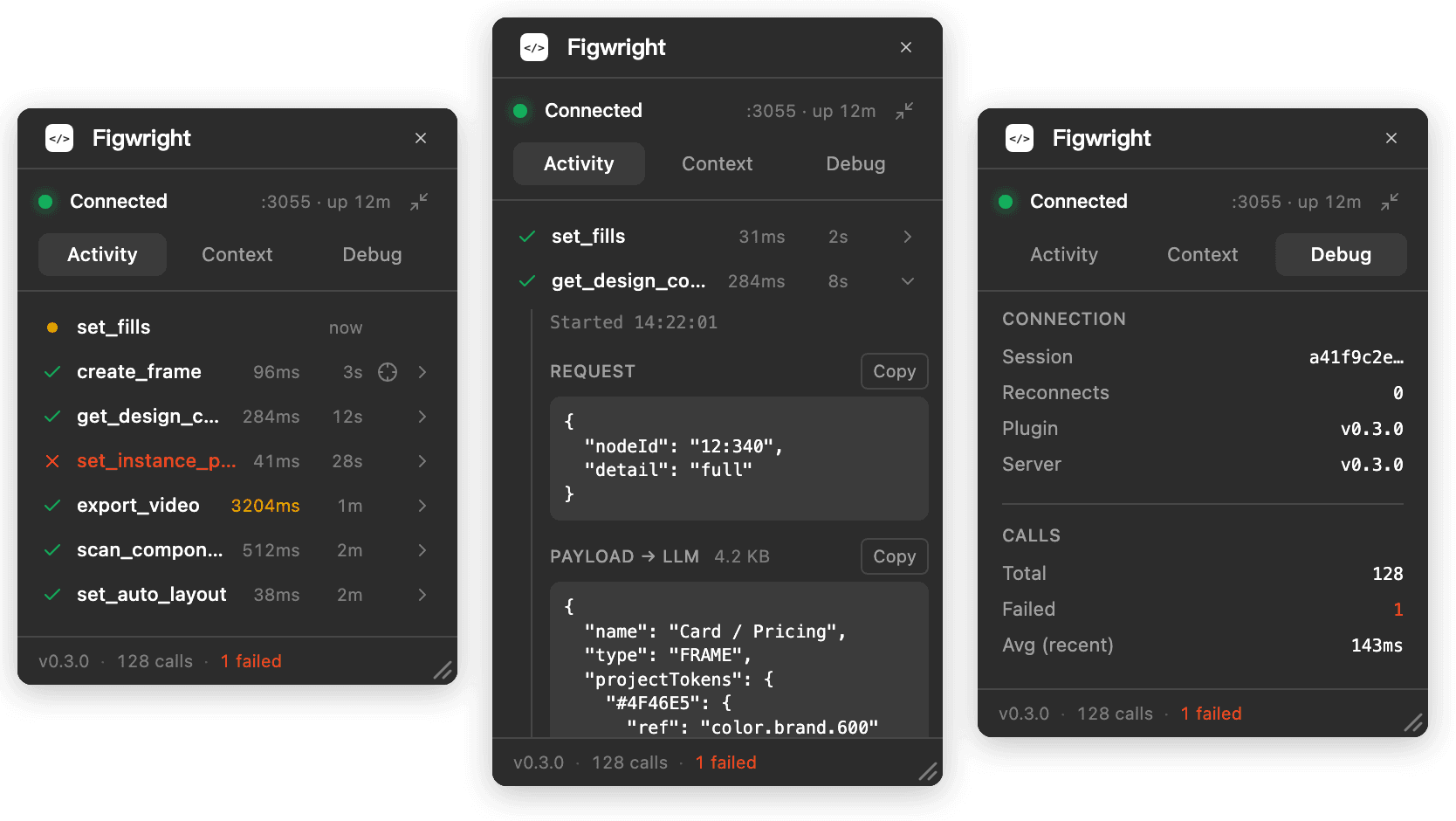
Figwright
Open-source bridge between AI agents and Figma that reads selections into framework-aware code and writes changes back to the canvas through a local MCP server and Figma plugin.
From Doers to Directors — Agentic Workflows and the Supervision Paradigm
Products are shifting from 'user executes tasks' to 'user supervises AI agents.' This requires entirely new UX patterns: confidence levels, decision logic visibility, and human override points. Design moves from task flows to orchestration interfaces — trust and observability become the new UX primitives.
Goldie
newOpen-source CLI and browser studio for producing App Store and Google Play screenshots and preview videos from simulator flows. Frames captures, applies copy and layouts, and checks store upload rules.
IconMind
Open-source icon system for AI-era software, covering agents, MCP, RAG, DevOps, security, and data workflows. Includes SVG files, framework packages, six visual variants, and a searchable MCP server.
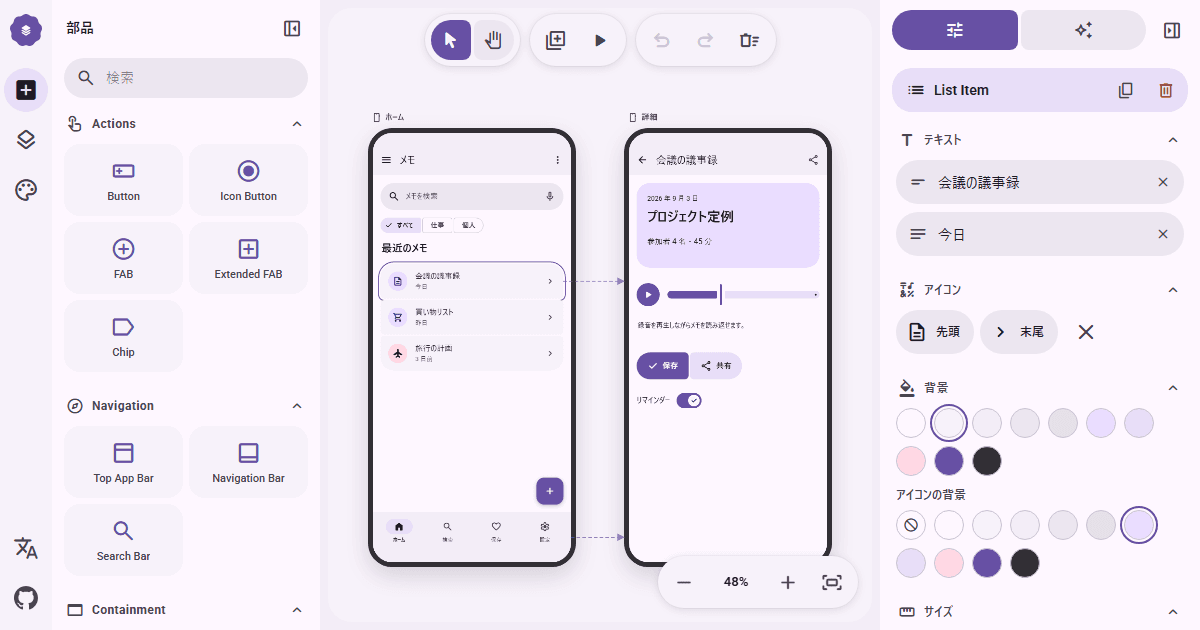
M3E Canvas
newBrowser-based Material 3 Expressive canvas for arranging responsive screens, linking tap and swipe flows, previewing interactions, and exporting a structured prompt for AI coding tools.
Maestri
Native macOS canvas for running multiple coding agents in spatial terminal nodes. Connect agents, assign reusable roles, draw diagrams, capture notes, and isolate work in APFS-backed floors.
Modeinspect
newVisual design canvas connected to a React codebase, using its components, tokens, live data, and responsive states. Teams can prototype against the product and hand engineering a scoped pull request.
Multi-Agent Design Teams: Role-Specific AI for Distributed Workflows
How design teams scale via role-specific agents (strategist, visual designer, accessibility reviewer) coordinating through shared docs. Agents handle consistency checks; humans preserve judgment on aesthetics. A practical model for augmenting design orgs without losing decision-making authority.
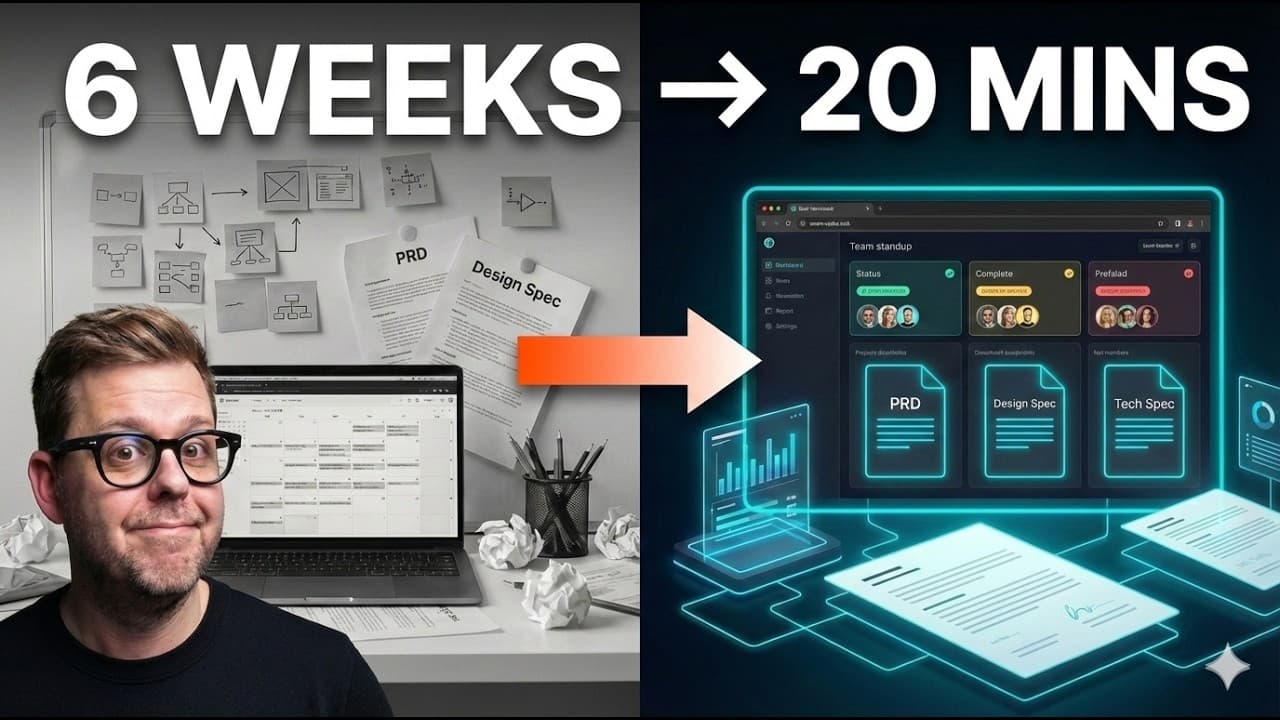
Multi-Agent Product Workflows: 6 Weeks to 20 Minutes
Real-world multi-agent product pipeline: PM agent writes PRD → Design agent prototypes → Eng agent generates scaffold. With human review checkpoints, end-to-end orchestration compresses 6 weeks of work to 20 minutes. Demonstrates practical agent chains for product delivery.
Open Design System Bench
Open-source harness that runs coding agents against a React design system and grades component use, API fidelity, tokens, accessibility, and compilation. Compares results across models and context levels.
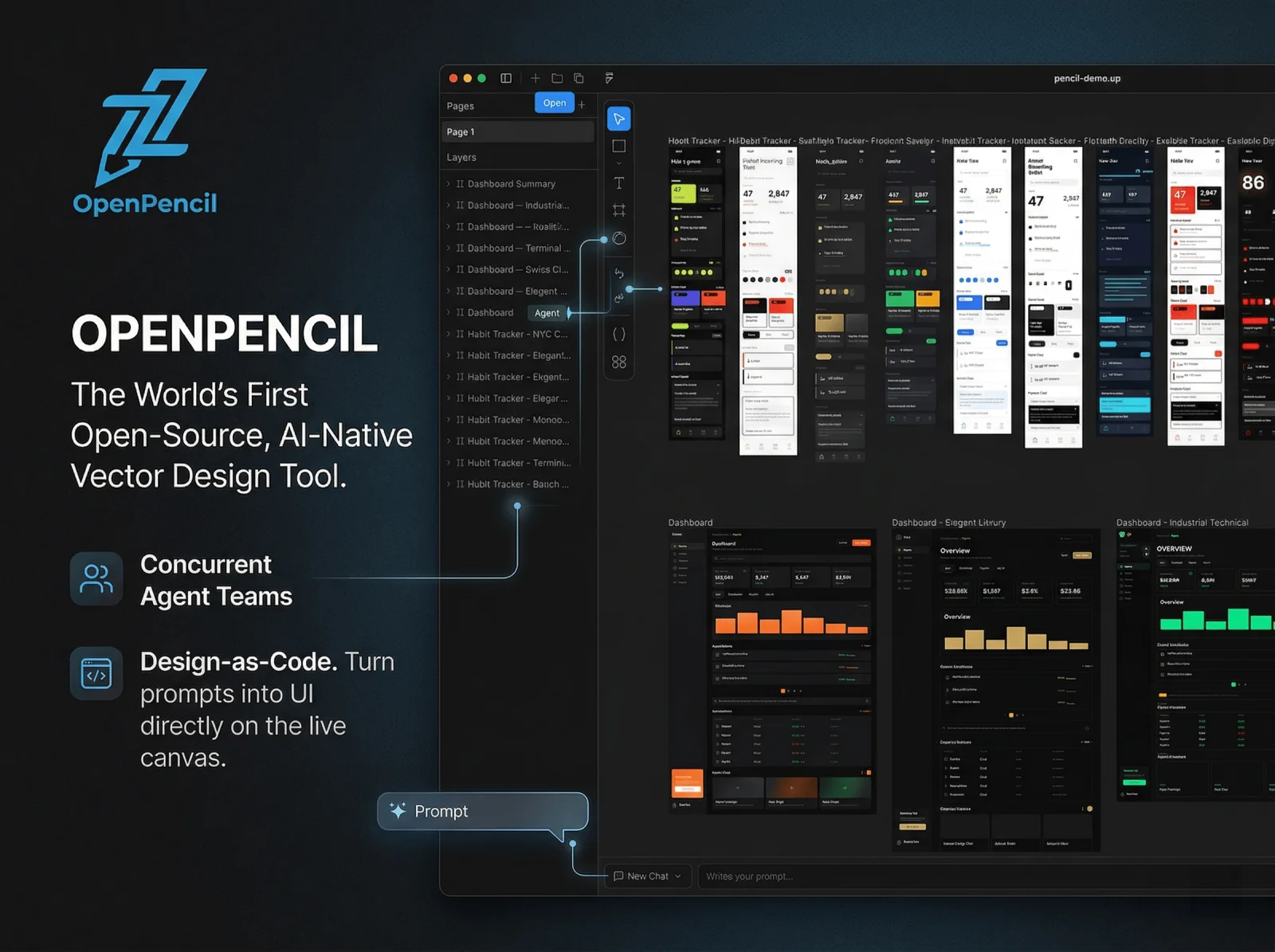
OpenPencil
Open-source, AI-native vector design canvas with prompt editing, diffable JSON files, MCP access, and code export for React, SwiftUI, Flutter, and other frameworks.
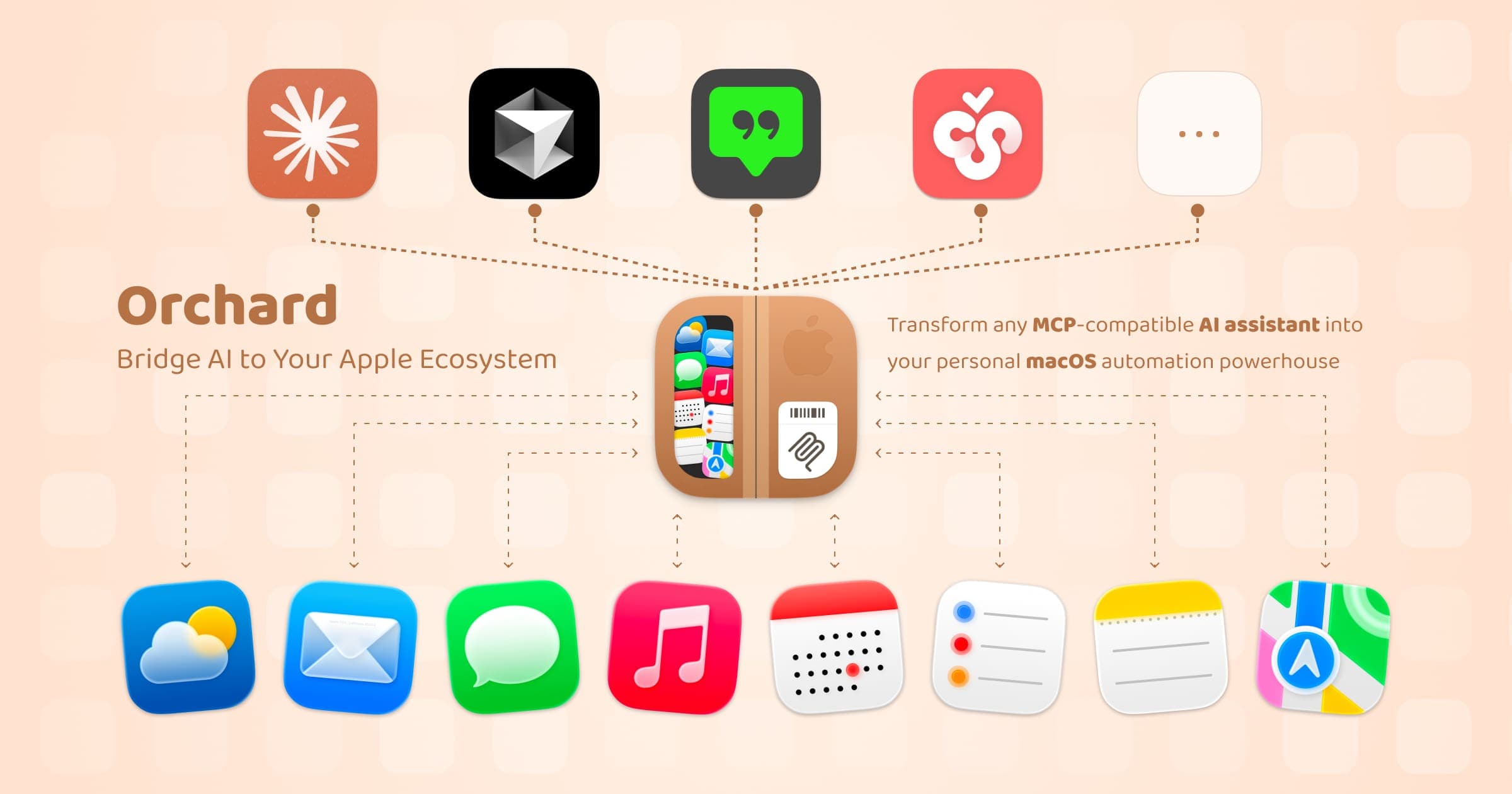
Orchard
Native macOS bridge that gives MCP-compatible AI assistants access to Calendar, Mail, Notes, Reminders, Messages, Maps, and more. Automation runs locally through Apple apps.
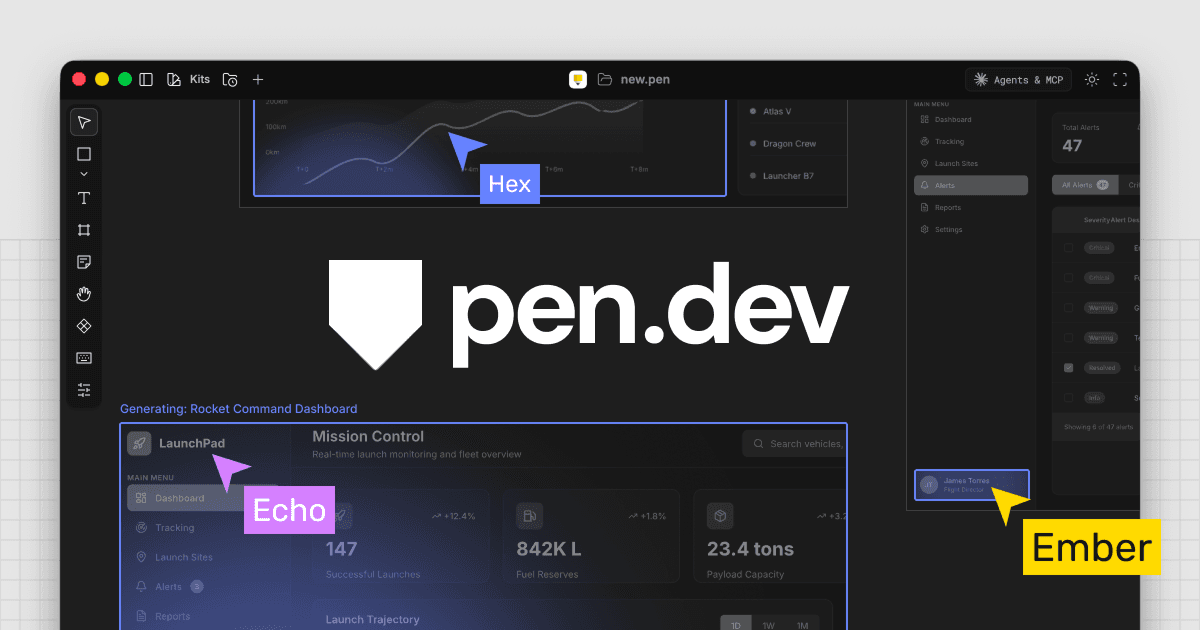
pen.dev
Vector design canvas for desktop apps and IDEs that stores open .pen files in the repo, imports Figma work, and supports bidirectional design and code changes through local MCP tools.
SessionWatcher
Native macOS menu bar tracker for usage, costs, and rate limits across Codex, Claude, Cursor, Copilot, Gemini, and other coding tools. Useful for planning long agent sessions.
shadcn MCP Server
Official shadcn MCP server for browsing, searching, and installing registry components from AI assistants. Works with public, third-party, and private registries.
simple-ai.dev
AI Agents workflows powered by Anthropic, xyflow, and AI SDK with one-click installable examples via shadcn CLI
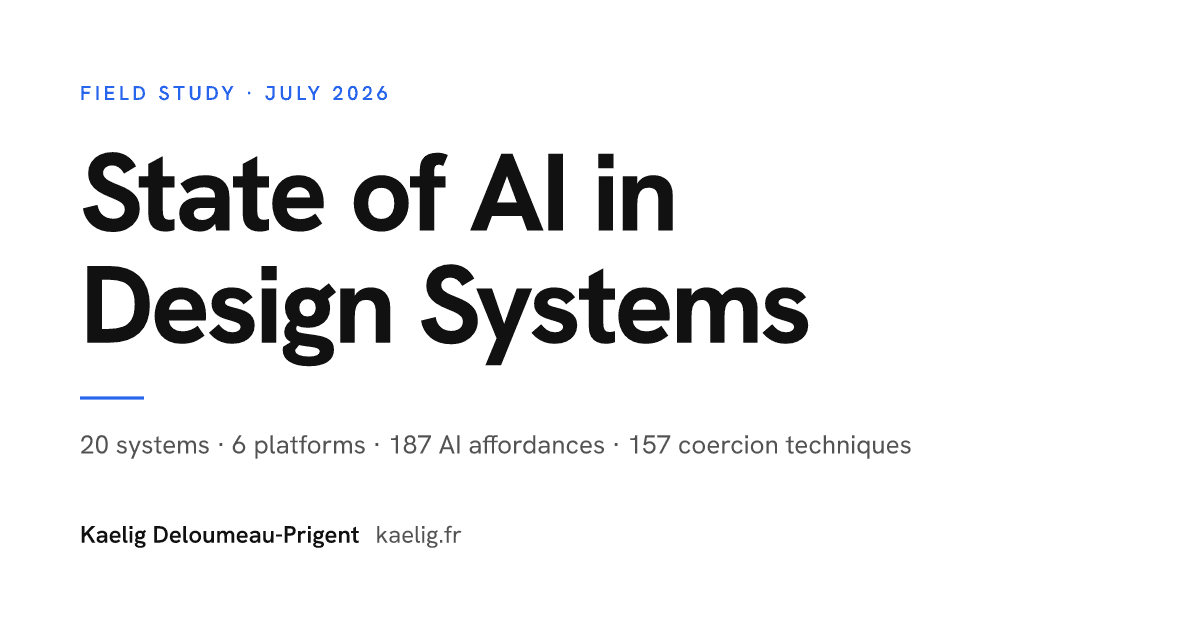
State of AI in Design Systems
Source-linked field study of how 20 maintained design systems expose MCP servers, agent skills, llms.txt, editor rules, registries, and other machine-readable interfaces.
VCR
Declarative motion graphics for AI agents
Vertical AI Agents for Design: Specialists Beat Generalists
Practical framework for building AI agents for design teams: specialized vertical agents (UX audit, feasibility assessment, market intelligence) outperform horizontal generalist chatbots by 10x. Shifts the conversation from 'add ChatGPT' to 'build domain-specific agents.'